You finish shaving, rinse your face, and a few minutes later it starts: your skin heats up, turns red, stings. Sometimes it’s gone within the hour, sometimes it lasts all day. That’s razor burn, and you don’t have to put up with it. To understand it, you need to look at what the blade really does to your skin.
What the blade cuts (besides the hair)
We tend to think a razor only cuts hair. In reality, with every stroke, the blade also scrapes the surface of the skin.
That surface is the stratum corneum: a thin layer of dead cells, stacked like bricks and held together by a mortar of lipids. You can’t see it, but it’s what protects your skin.
When you shave, you remove part of it. On the face, part of what the blade takes away is skin cells, not hair. One stroke isn’t a problem, but when you go over the same spot again and again, or when the blade rubs instead of gliding, the layer gets thinner.
The skin barrier: what it’s for
The stratum corneum has two jobs:
- keeping water in: it stops the skin from drying out.
- keeping things out: dust, bacteria, fragrance, alcohol…
As long as it’s intact, you don’t feel it. It’s when it’s damaged that you notice.
Where does razor burn come from?
When the blade has rubbed too much, the barrier weakens:
- The skin loses water: it becomes dry and tight.
- It lets in what it usually keeps out: the alcohol aftershave that stings, the fragrance that burns, the rubbing of a shirt collar.
- It defends itself: blood rushes in, the area turns red and hot.
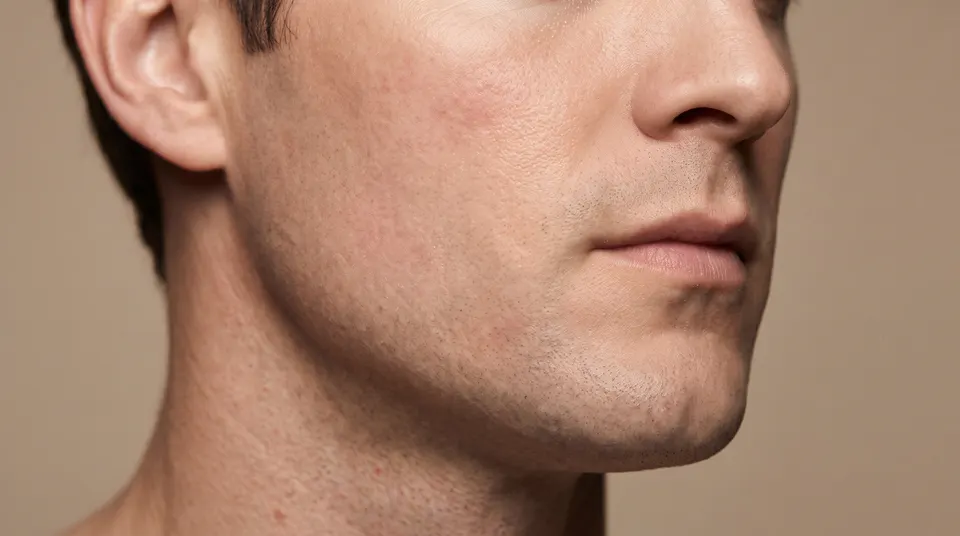
Razor burn is that reaction. It’s not a cut or an allergy, but skin that has lost its protection and is reacting.
Don’t confuse it with ingrown hairs, the small spots that appear a few days later when the hair grows back under the skin. They’re not the same thing, even if irritated skin is more prone to them.
What makes it worse
- Shaving dry or on poorly wetted skin: the hair stays hard, the blade has to force.
- Foam that collapses: the air escapes and the blade ends up directly on the skin.
- A blunt blade: it catches instead of cutting cleanly.
- Going over the same spot again and again: each stroke removes a little more of the stratum corneum.
- An alcohol-based aftershave: it lands on skin that’s already weakened.
What you need between the blade and the skin
What all these situations have in common is friction. To protect the skin barrier, the blade needs to glide instead of rub.
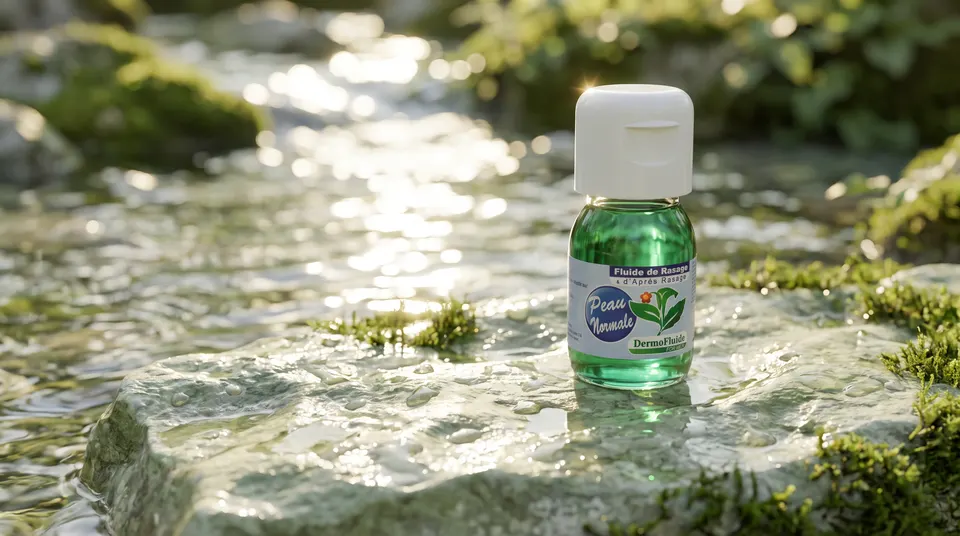
That’s what shaving fluid does. On well-wetted skin, 3 to 5 drops form a lubricating film between the blade and the skin:
- The blade glides: it cuts the hair without scraping the skin, and you don’t need to go over the same spot ten times.
- The film lasts the whole shave: it doesn’t collapse like foam. If the glide fades, a little water is enough to bring it back.
- You can see what you’re doing: the fluid is transparent, so you don’t go back over areas you’ve already shaved.
- Your skin stays moisturised afterwards: the fluid’s moisturising agents stay on the skin after rinsing. No need for an alcohol aftershave.
The result: across 50 testers, 77% of shaves with the fluid were free of razor burn, compared with 37% with foam.
Which one for skin that burns?
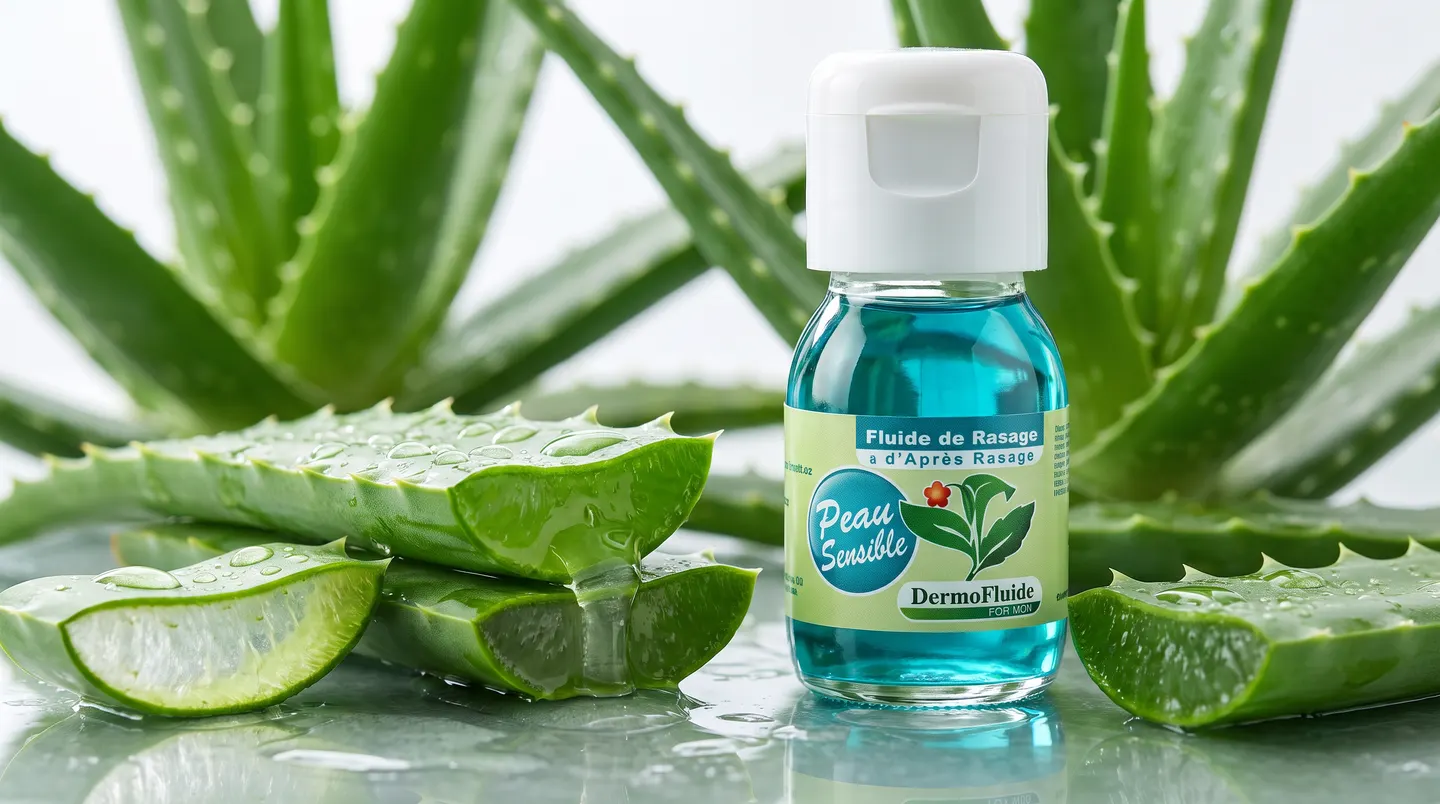
- Peau Sensible: its aloe vera soothes the skin as soon as the blade passes. The choice for skin that reddens easily.
- Odorless: no fragrance, no essential oils, no colourings, no preservatives. For skin that also reacts to fragrance.
In short
| What happens | What helps | |
|---|---|---|
| While shaving | The blade scrapes the skin barrier | A film that glides |
| Right after | The skin loses water | Moisturising agents |
| Within the next hour | Redness, heat, stinging | No alcohol on the skin |
Going further
Technique matters as much as the product: shaving with a manual razor or with an electric razor.
And if you’re wondering how so little product can protect your whole face: why 3 to 5 drops are enough.